
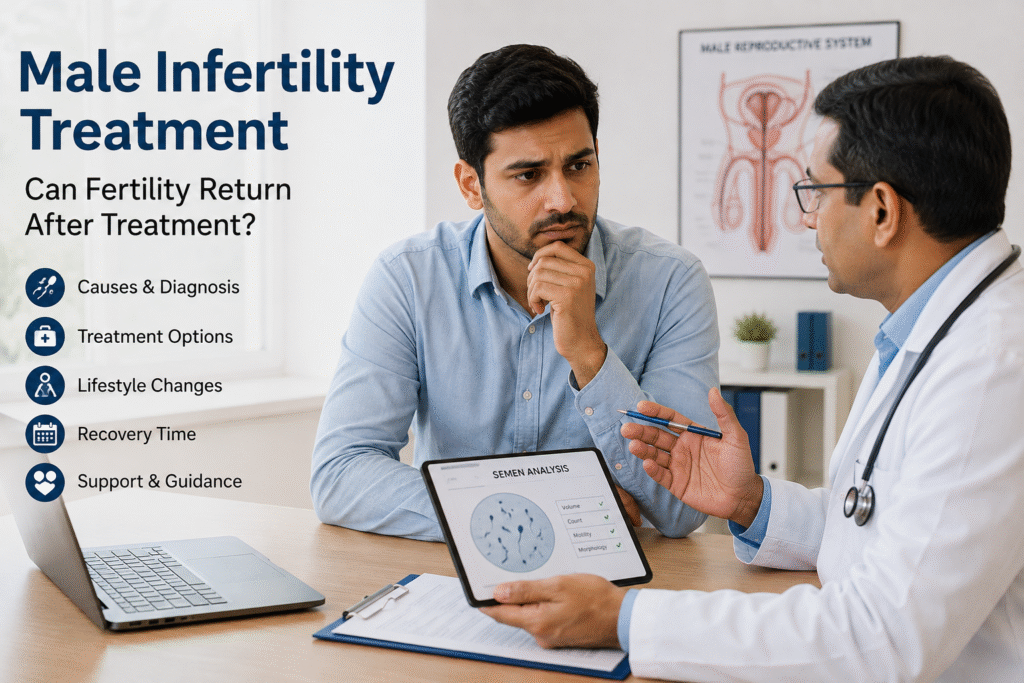
Male infertility can be an emotional and confusing experience for couples who are trying to have a baby. Many men wonder whether fertility can return after treatment or whether infertility is permanent. The answer depends on the underlying cause, the treatment received, and the individual’s overall reproductive health. Consulting a qualified sexologist in Rohtak can help identify the reason for infertility and explain the most suitable options.
What Does Male Infertility Mean?
Male infertility means that a man has difficulty contributing to a pregnancy despite having regular unprotected sexual intercourse. It can happen because of problems with sperm production, sperm movement, sperm quality, hormones, or the reproductive organs. In some cases, more than one factor may be responsible.
Infertility does not automatically mean that a man can never become a father. Many fertility problems can be evaluated and, depending on the cause, may be treatable. Getting the correct diagnosis is therefore more useful than assuming that the condition is permanent.
What Role Does Sperm Play in Fertility?
Sperm are microscopic reproductive cells produced inside the testicles. For conception to occur naturally, sperm need to be produced in sufficient numbers, move properly, and have the ability to reach and fertilize an egg.
A semen analysis can provide important information about sperm concentration, movement, shape, and other characteristics. An abnormal result does not always provide the complete explanation, so doctors may recommend additional evaluation.
A sexologist in Rohtak can review semen analysis results and help determine whether the findings may be related to a specific fertility problem.
What Are the Common Causes of Male Infertility?
Male infertility can develop for many different reasons. Low sperm count, poor sperm movement, abnormal sperm shape, hormonal imbalance, varicocele, certain infections, previous testicular injuries, and genetic conditions are some possible causes.
Lifestyle factors can also influence reproductive health. Smoking, excessive alcohol consumption, obesity, prolonged stress, inadequate sleep, poor nutrition, and repeated exposure to excessive heat may affect sperm quality in some men.
Certain medicines and treatments can also interfere with sperm production. For example, testosterone therapy and anabolic steroids may suppress the body’s natural signals needed for sperm development.
Does Male Infertility Have Symptoms?
In many cases, male infertility does not cause obvious physical symptoms. A man may feel completely healthy but still have an abnormal semen analysis.
Some underlying conditions can produce signs such as reduced sexual desire, erectile difficulties, pain or swelling around the testicles, changes in ejaculation, or hormonal symptoms. However, these signs are not present in every case.
If conception has been difficult, consulting a sexologist in Rohtak can help identify whether fertility testing is appropriate.
How Is Male Infertility Diagnosed?
Diagnosis usually begins with a detailed medical and reproductive history. The doctor may ask about previous illnesses, surgeries, medications, lifestyle habits, sexual health, and how long the couple has been trying to conceive.
A semen analysis is commonly used to assess sperm concentration, motility, morphology, and other semen characteristics. Depending on the findings, additional tests such as hormone evaluation, physical examination, ultrasound, or genetic testing may be considered.
The purpose of these investigations is to find the underlying reason rather than simply treating the sperm count without understanding the cause.
Can Male Infertility Be Treated?
Treatment depends on what is causing the fertility problem. Some men may benefit from lifestyle improvements, while others may require medicines, hormonal treatment, treatment for an infection, or management of a condition such as varicocele.
When natural conception remains difficult, assisted reproductive techniques may also provide additional options. The appropriate approach depends on the man’s fertility profile and the reproductive health of his partner.
A sexologist in Rohtak can help explain the available treatment choices after reviewing the relevant test results.
When Should You Seek Professional Help?
If pregnancy has not occurred despite regular unprotected intercourse, it is sensible for both partners to consider fertility evaluation rather than waiting indefinitely. Men with a history of testicular problems, reproductive surgery, hormonal disorders, or previous fertility concerns may also benefit from earlier assessment.
A sexologist in Rohtak can help identify possible causes of male infertility and recommend suitable investigations. Understanding the actual problem can make treatment more focused and may improve the chances of achieving pregnancy.
Can Fertility Return After Treatment?
Yes, fertility can return or improve after treatment in some men, but the outcome depends largely on the cause of infertility. Male infertility is not always a permanent condition. When a treatable problem is identified and managed correctly, sperm production, sperm quality, or reproductive function may improve over time.
However, recovery is different for every person. Factors such as age, overall health, sperm parameters, duration of the problem, and the type of treatment received can influence the result. A sexologist in Rohtak can evaluate these factors and provide a more realistic understanding of the chances of improvement.
When Is Fertility More Likely to Improve?
Fertility may have a better chance of improving when the underlying cause can be corrected. For example, some men may experience fertility problems because of hormonal disturbances, certain infections, varicocele, unhealthy lifestyle habits, or medications that interfere with sperm production.
Treating the specific condition may allow the reproductive system to function more normally. In some situations, improving weight, stopping tobacco, reducing alcohol consumption, getting better sleep, and managing stress can also support healthier sperm production.
The key is to treat the reason behind the fertility problem, rather than focusing only on increasing sperm count. A sexologist in Rohtak can help determine which factors may be affecting your reproductive health.
How Long Can Recovery Take?
Fertility recovery usually takes time because sperm are not produced instantly. The body continuously develops new sperm, and changes in sperm production may take several weeks or longer to become noticeable.
For this reason, doctors may recommend a follow-up semen analysis after an appropriate interval. Comparing the results can show whether sperm concentration, movement, or other parameters are changing after treatment.
The recovery period varies depending on the condition being treated. Some men may see improvement relatively quickly, while others may require longer-term management.
Does Treatment Always Restore Fertility?
Treatment does not guarantee complete restoration of fertility. Some medical conditions can cause significant or permanent damage to sperm-producing tissue. Genetic problems, severe testicular damage, certain cancer treatments, and some other conditions may limit natural sperm production.
Even when sperm production does not return to a level that allows natural conception, fertility treatment may still provide other possibilities. Depending on the situation, assisted reproductive methods can sometimes help couples achieve pregnancy.
A sexologist in Rohtak can discuss these possibilities after reviewing your semen analysis, medical history, and fertility goals.
Can Lifestyle Changes Support Recovery?
Healthy lifestyle habits can be an important part of fertility care. Regular exercise, nutritious food, healthy weight management, adequate sleep, and stress control can support overall reproductive wellness.
Avoiding smoking, limiting excessive alcohol intake, and reducing unnecessary exposure to high temperatures may also be beneficial for sperm health. These measures are especially useful when lifestyle factors are contributing to poor semen quality.
Lifestyle changes should complement medical treatment when an underlying condition has been identified. They should not be considered a replacement for professional evaluation.
What If Fertility Does Not Improve?
If sperm parameters remain low despite treatment, your doctor may investigate whether another cause is present. Additional hormone tests, imaging, genetic investigations, or other assessments may be recommended depending on the individual case.
If natural conception remains difficult, options such as IUI, IVF, or ICSI may be considered according to the fertility profile of both partners.
A sexologist in Rohtak can explain the available options and help you understand which approach may be appropriate for your circumstances.
Why Is Follow-Up Important?
Completing treatment does not always mean that fertility should be assessed only once. Follow-up allows doctors to monitor changes and determine whether the chosen approach is producing the desired results.
Regular evaluation can also help identify new factors that may be affecting conception. If you are concerned about fertility after treatment, consulting a sexologist in Rohtak can provide a clearer picture of your current reproductive health and the next steps.
Treatment of Hormonal Problems
Hormonal problems can affect male fertility because sperm production depends on a carefully balanced communication system between the brain, pituitary gland, and testicles. When hormones such as testosterone, FSH, LH, or prolactin are not functioning normally, sperm development may be reduced.
The good news is that some hormonal causes of male infertility can be managed with appropriate medical treatment. The treatment is not the same for every man, so identifying the specific hormonal problem is an important first step. A sexologist in Rohtak can assess your symptoms, medical history, and fertility reports before suggesting further evaluation.
How Are Hormonal Problems Diagnosed?
Doctors may recommend blood tests to measure reproductive hormones when a low sperm count or other findings suggest a possible hormonal cause. Depending on the symptoms, tests may include testosterone, FSH, LH, prolactin, and thyroid-related hormones.
The timing of testing can sometimes matter because certain hormone levels naturally change during the day. Your doctor may therefore recommend testing at a particular time or repeating a result if necessary.
A semen analysis is also important because hormone levels alone cannot show the complete picture of sperm health. A sexologist in Rohtak can consider both hormone results and semen parameters when assessing fertility.
Treatment for Low Testosterone
Low testosterone can have different causes, and treatment depends on why the level is reduced. When a man wants to have children, simply taking testosterone may not be the right approach because external testosterone can suppress the signals that stimulate sperm production.
In selected cases, doctors may use treatments designed to encourage the body’s own reproductive hormone pathway instead. The choice depends on the underlying diagnosis, hormone levels, and fertility goals.
This is why testosterone should not be started without professional supervision. A sexologist in Rohtak can help determine whether low testosterone is actually contributing to the fertility problem and whether treatment is appropriate.
Managing High Prolactin Levels
Prolactin is another hormone that can influence reproductive function. When prolactin levels become abnormally high, some men may experience reduced sexual desire, erectile difficulties, or impaired sperm production.
Treatment focuses on finding the reason for the elevated level. Certain medicines, thyroid problems, and conditions affecting the pituitary gland can sometimes contribute to increased prolactin.
Once the underlying cause is identified, appropriate medical management may help restore hormonal balance. A sexologist in Rohtak can recommend relevant investigations when symptoms indicate that prolactin or another hormone may be involved.
Can Hormonal Treatment Restore Sperm Production?
In some men, treating the hormonal disorder can improve the signals required for sperm development. However, the response varies according to the cause and severity of the condition.
Improvement should be monitored through follow-up testing rather than judged only by changes in symptoms. Semen analysis can help determine whether sperm concentration and other parameters are changing after treatment.
Hormonal medicines should always be used according to a doctor’s plan because incorrect treatment can potentially worsen fertility. A sexologist in Rohtak can monitor your progress and make recommendations based on your test results.
Why Should You Avoid Self-Medication?
Fertility-related hormone treatment requires careful diagnosis. Taking testosterone, hormone boosters, or unverified supplements without knowing the underlying problem can interfere with the body’s natural reproductive system.
A proper evaluation helps determine whether the issue is genuinely hormonal or whether another factor, such as varicocele, infection, medication, or lifestyle, is affecting sperm production.
If you are concerned about hormonal infertility, a sexologist in Rohtak can guide you through the appropriate testing and treatment process. Personalized care is important because restoring fertility requires a different approach from simply increasing hormone levels.
Can Varicocele Treatment Improve Fertility?
Yes, treating a varicocele may improve fertility in some men, particularly when the condition is associated with an abnormal semen analysis or other signs of reduced reproductive function. However, treatment does not guarantee that every man will experience the same improvement.
A varicocele is an enlargement of the veins around the testicle. It can interfere with the normal environment required for sperm development and may be associated with reduced sperm count, poorer sperm movement, or changes in sperm quality. A sexologist in Rohtak can help determine whether a varicocele may be relevant to your fertility concerns.
How Can Varicocele Affect Sperm Production?
The testicles need a suitable temperature and healthy blood circulation for normal sperm production. Enlarged veins may interfere with the body’s ability to regulate temperature around the testicles.
A varicocele may also be associated with changes in blood flow, oxidative stress, and the local testicular environment. Over time, these factors can affect the cells responsible for producing sperm.
Not every man with a varicocele has fertility problems. Some men may have the condition without any noticeable effect on sperm health. This is why the severity of the varicocele and the results of fertility testing both matter.
When Is Varicocele Treatment Considered?
Treatment is not automatically required whenever a varicocele is found. Doctors generally consider factors such as whether the varicocele can be felt during examination, whether the couple is experiencing difficulty conceiving, and whether semen parameters are abnormal.
Persistent testicular discomfort or evidence of impaired testicular function may also influence the treatment decision. A sexologist in Rohtak can review your symptoms and fertility reports and determine whether further evaluation by an appropriate specialist may be needed.
What Happens During Varicocele Treatment?
When treatment is considered appropriate, procedures are generally aimed at closing or redirecting the enlarged veins so that blood can flow through healthier pathways. Surgical and minimally invasive approaches may be available depending on the individual case and specialist assessment.
The goal is to improve the testicular environment rather than directly placing sperm into the reproductive system. The choice of procedure depends on the anatomy, clinical findings, medical history, and specialist recommendation.
How Soon Can Sperm Improve After Treatment?
Sperm production takes time, so changes are not expected immediately after varicocele treatment. The body needs time to produce new sperm and for those sperm to mature.
Doctors may recommend a follow-up semen analysis after an appropriate period to assess whether sperm concentration, movement, or other parameters have changed. Some men may show improvement, while others may have limited or no change.
A sexologist in Rohtak can help interpret follow-up semen reports and determine whether additional fertility evaluation is necessary.
Can Varicocele Treatment Increase the Chance of Pregnancy?
Improving semen parameters may increase the possibility of natural conception in selected couples, but pregnancy depends on many factors. The female partner’s age and reproductive health, timing of intercourse, sperm quality, and other medical conditions can all influence the outcome.
If natural conception remains difficult after treatment, assisted reproductive techniques may sometimes be considered based on the couple’s complete fertility profile.
A sexologist in Rohtak can discuss the available options if pregnancy does not occur despite improvement in semen parameters.
What If Fertility Does Not Improve?
Varicocele may not be the only factor affecting fertility. Hormonal disorders, infections, genetic conditions, lifestyle habits, previous testicular injury, or other reproductive problems can also contribute to abnormal sperm results.
If semen parameters remain poor after treatment, further investigation may help identify another underlying cause. Avoid assuming that the varicocele was solely responsible without reviewing the complete clinical picture.
A sexologist in Rohtak can help assess persistent fertility concerns and guide you toward appropriate testing or treatment.
Lifestyle Changes Also Matter
Medical treatment can address a specific cause of male infertility, but everyday habits can also influence sperm health. Sperm production is a continuous process, and factors such as diet, exercise, sleep, stress, tobacco use, alcohol consumption, and body weight may affect the reproductive system.
Healthy lifestyle changes cannot guarantee a return of fertility, but they can create better conditions for overall reproductive health. A sexologist in Rohtak can help you understand which habits may be relevant to your individual fertility concerns.
Maintain a Healthy Weight
Being significantly overweight or underweight can affect hormonal balance and metabolic health. Excess body fat may influence testosterone levels, while inadequate nutrition can deprive the body of nutrients needed for normal cellular functions.
A gradual approach to weight management is usually more practical than following extreme diets. Combining nutritious meals with regular physical activity can support healthy metabolism and general well-being.
If weight is one of the concerns identified during a fertility evaluation, a sexologist in Rohtak can guide you on the role it may play alongside other contributing factors.
Eat a Balanced and Nutritious Diet
Sperm cells need a variety of nutrients for normal development and function. Include vegetables, fruits, whole grains, pulses, eggs, lean protein, nuts, seeds, and healthy sources of fats in your regular meals.
Antioxidant-rich foods may help support the body’s ability to manage oxidative stress. However, no single food or supplement can be considered a guaranteed solution for low sperm count.
Instead of relying on fertility products promoted online, focus on maintaining a balanced eating pattern over the long term. Professional advice from a sexologist in Rohtak may be useful if you are considering supplements or have a diagnosed nutritional deficiency.
Exercise Regularly
Regular moderate physical activity can support cardiovascular fitness, healthy weight, mood, and metabolic function. Activities such as walking, cycling, swimming, or strength training can be incorporated according to your fitness level.
Excessive training without adequate recovery may not be beneficial, particularly when it is combined with poor nutrition or insufficient sleep. The goal should be consistent, balanced physical activity rather than extreme workouts.
Stop Smoking and Limit Alcohol
Tobacco smoke contains chemicals that may increase oxidative stress and negatively influence sperm quality. Heavy alcohol consumption can also interfere with reproductive hormones and other aspects of male health.
Reducing or avoiding these substances can remove potentially harmful lifestyle factors from your fertility plan. If quitting has been difficult, professional support can make the process more manageable.
A sexologist in Rohtak can discuss your lifestyle history and help you identify changes that may support your fertility goals.
Give Your Body Enough Sleep
Poor sleep can affect hormonal regulation, mood, energy levels, and daily habits. Maintaining a consistent sleep schedule and allowing enough time for rest can support overall health.
Try to keep regular sleeping and waking times, reduce unnecessary screen exposure before bed, and avoid excessive caffeine late in the day. Better sleep can also make it easier to manage stress and maintain healthy routines.
Manage Stress in Healthy Ways
Long-term psychological stress may influence reproductive hormones and can also lead to habits that are unfavorable for fertility. Finding healthy ways to handle pressure can therefore be useful.
Regular exercise, breathing exercises, meditation, hobbies, social interaction, and planned breaks may help improve stress management. If stress is persistent or significantly affecting your daily life, consider discussing it with an appropriate healthcare professional.
A sexologist in Rohtak can evaluate lifestyle factors as part of a broader fertility assessment rather than treating one habit in isolation.
How Long Should You Follow These Changes?
Sperm development takes time, so lifestyle improvements should be maintained consistently rather than followed for only a few days or weeks. Doctors may use follow-up semen analyses to monitor changes in sperm concentration and other parameters.
Results can vary because fertility is influenced by multiple factors. If lifestyle changes alone do not improve your semen report, further medical evaluation may be necessary.
Working with a sexologist in Rohtak can help you combine healthy habits with appropriate medical care when required, giving you a more structured approach to improving reproductive health.
How Long Does Fertility Recovery Take?
Fertility recovery does not happen at the same speed for every man. The time required depends on the cause of infertility, the treatment received, sperm health, hormone levels, age, overall health, and lifestyle habits. Some men may notice improvement after addressing a treatable problem, while others may require longer monitoring or additional treatment.
It is important to understand that improvement in fertility is usually a gradual process rather than an immediate result. A sexologist in Rohtak can help set realistic expectations based on your medical history and fertility test results.
Why Does Sperm Recovery Take Time?
Sperm production is a continuous biological process that involves several stages. New sperm need time to develop, mature, and become capable of normal movement and function.
Because of this natural cycle, a treatment that improves the conditions for sperm production may not produce an immediate change in a semen report. Doctors often allow sufficient time for a new group of sperm to develop before checking the results again.
A sexologist in Rohtak may recommend follow-up semen analysis after an appropriate interval to determine whether sperm concentration, movement, or other parameters have changed.
Does the Cause of Infertility Affect Recovery Time?
Yes. The underlying cause can have a major influence on how quickly fertility parameters change. For example, men whose fertility problems are related to certain lifestyle factors may need consistent healthy habits over time before measurable improvement is seen.
When infertility is associated with a hormonal disorder, infection, varicocele, medication, or another medical condition, recovery depends on how effectively that specific issue responds to treatment.
This is why there is no single recovery timeline that applies to every patient. A sexologist in Rohtak can assess the cause and explain what type of follow-up may be appropriate.
When Should a Follow-Up Semen Test Be Done?
A semen analysis is commonly used to monitor changes in sperm health. Your doctor may suggest repeating the test after enough time has passed for new sperm to develop following treatment or major lifestyle changes.
The follow-up report can provide information about sperm concentration, total number, movement, and morphology. Comparing it with an earlier result can help determine whether there has been meaningful progress.
One abnormal report does not necessarily represent a man’s permanent fertility status. Results can naturally vary, so professional interpretation is important.
Can Lifestyle Changes Speed Up Recovery?
Healthy habits can support the body’s reproductive functions, although they cannot guarantee faster recovery. Quitting smoking, limiting excessive alcohol, maintaining a healthy weight, exercising regularly, eating a nutritious diet, managing stress, and getting adequate sleep can all contribute to better overall health.
Avoiding unnecessary heat exposure and discussing potentially fertility-affecting medicines with your doctor may also be useful. These changes should be maintained consistently rather than followed only for a short period.
A sexologist in Rohtak can help identify which lifestyle factors are most relevant to your individual situation.
What If There Is No Improvement?
If sperm parameters do not improve as expected, your doctor may investigate whether another factor is contributing to infertility. Additional hormone tests, physical examination, ultrasound, genetic testing, or other investigations may be considered depending on the findings.
In some cases, natural fertility may remain limited even after appropriate treatment. Assisted reproductive options such as IUI, IVF, or ICSI may then be discussed according to the fertility status of both partners.
A sexologist in Rohtak can explain these options and help you understand the next steps based on your test results.
Is Patience Important During Fertility Treatment?
Yes. Fertility treatment often requires monitoring rather than expecting immediate results. Regular follow-up allows doctors to see how the body is responding and whether the treatment plan needs adjustment.
Instead of judging progress only by symptoms, objective tests such as semen analysis and hormone evaluation can provide more useful information.
If you are undergoing infertility treatment, staying consistent with medical advice and healthy habits can make the recovery process more structured. A sexologist in Rohtak can guide you throughout the evaluation and follow-up process.
What If Natural Fertility Does Not Return?
Sometimes, fertility may not return to a level that allows natural conception even after appropriate treatment. This can happen when sperm production remains very low, there is significant testicular damage, a genetic condition is present, or the underlying cause cannot be completely corrected.
However, not achieving natural pregnancy does not mean that becoming a parent is impossible. Modern fertility care offers several options that can help couples move forward depending on their individual circumstances. A sexologist in Rohtak can evaluate the available possibilities after reviewing the man’s fertility reports and medical history.
Why Might Natural Fertility Remain Low?
The outcome of infertility treatment depends on the condition affecting sperm production. Some medical problems can be treated successfully, while others may continue to limit the number or quality of sperm.
Severe hormonal disorders, certain genetic conditions, extensive damage to the testicles, previous cancer treatment, or advanced reproductive problems may make natural conception more difficult. In some cases, sperm may be produced in very small numbers even when they are not found in the semen.
Finding out why fertility has not improved is important before deciding on the next step. A sexologist in Rohtak may recommend additional semen testing, hormone evaluation, imaging, or other investigations when required.
Can Assisted Reproductive Treatment Help?
Yes, assisted reproductive techniques may provide an option when natural conception remains difficult. The choice depends on the sperm count, sperm movement, sperm quality, and the reproductive health of the female partner.
Intrauterine insemination (IUI) may be considered in selected situations where there are enough healthy, moving sperm available. For more significant male-factor infertility, in vitro fertilization (IVF) may provide another route.
When sperm count is extremely low or sperm movement is severely affected, intracytoplasmic sperm injection (ICSI) can be considered as part of IVF. In this procedure, a single sperm is injected directly into an egg to assist fertilization.
What If Very Few Sperm Are Available?
Some men with severe male infertility may still produce a small number of sperm. In selected cases, doctors may consider retrieving sperm directly from the testicular tissue or another part of the reproductive tract for use with assisted reproduction.
Whether this is suitable depends on the reason for the low sperm production and the results of previous investigations. It should only be considered after proper specialist evaluation.
A sexologist in Rohtak can explain whether further assessment may be useful and help you understand the fertility options relevant to your situation.
What If No Sperm Are Found in the Semen?
When no sperm are detected in the semen, the condition is known as azoospermia. This does not always mean that the testicles produce no sperm at all.
In some men, sperm production may be occurring but blocked from reaching the semen because of an obstruction. In other cases, the testicles may produce very few or no sperm. These two situations require different approaches.
Additional testing can help distinguish between the possible causes. A sexologist in Rohtak can guide you through the appropriate evaluation and discuss whether sperm retrieval or other fertility options may be possible.
Should You Give Up After One Unsuccessful Treatment?
Not necessarily. Fertility treatment can require more than one step, particularly when the initial treatment does not produce the expected improvement. The next approach depends on what was learned from previous treatment and whether another contributing factor has been identified.
It is better to review the results with a fertility specialist rather than repeatedly trying random medicines, supplements, or unproven remedies. Every treatment should have a clear purpose based on the individual’s condition.
When Should You Seek Further Guidance?
If your sperm count remains low after treatment, conception has not occurred, or you have been told that natural fertility may be limited, professional guidance can help you understand your choices.
A sexologist in Rohtak can review your previous reports, explain potential assisted reproductive options, and help you decide what further evaluation may be appropriate. Even when natural fertility does not return completely, timely medical support can help couples explore realistic paths toward pregnancy.
Final Thoughts
Male infertility can have different causes, and the possibility of becoming fertile again depends largely on identifying and treating the specific problem. Some men experience meaningful improvement after medical treatment and healthier lifestyle choices, while others may need assisted reproductive techniques.
If you are concerned about fertility after treatment, avoid assuming that the situation cannot improve. A sexologist in Rohtak can evaluate your condition, review previous treatment, and guide you toward the next appropriate step.
Frequently Asked Questions (FAQs)
1. Can a man become fertile again after infertility treatment?
Yes, fertility may improve or return in some men after appropriate treatment, depending on the underlying cause. A sexologist in Rohtak can evaluate the condition and explain the chances of fertility recovery.
2. How long does it take for male fertility to recover?
Recovery time varies from person to person because sperm production takes several weeks and depends on the cause being treated. A sexologist in Rohtak can recommend suitable follow-up testing to monitor progress.
3. Can hormonal treatment restore male fertility?
In selected cases, treating a hormonal disorder may help restore the signals needed for sperm production. A sexologist in Rohtak can recommend hormone tests and determine whether hormonal treatment may be suitable.
4. Can varicocele treatment improve fertility?
Varicocele treatment may improve semen parameters in some men, particularly when the condition is associated with fertility problems. A sexologist in Rohtak can assess the condition and guide you regarding further evaluation.
5. Can lifestyle changes improve fertility after treatment?
Healthy weight management, regular exercise, nutritious food, adequate sleep, avoiding smoking, and limiting excessive alcohol may support sperm health. A sexologist in Rohtak can help identify which lifestyle changes are relevant to your fertility goals.
6. Can testosterone treatment affect sperm production?
Yes, taking testosterone from outside the body can suppress the hormonal signals responsible for sperm production and may reduce sperm count. A sexologist in Rohtak can help men understand safer fertility-focused treatment approaches.
7. What if sperm count does not improve after treatment?
If sperm parameters remain low, additional testing may be needed to identify another underlying cause. A sexologist in Rohtak can review previous reports and discuss appropriate fertility treatment options.
8. Can IVF help when natural fertility does not return?
Yes, IVF may be an option for some couples when natural conception remains difficult. A sexologist in Rohtak can explain whether IVF or other assisted reproductive techniques may be appropriate based on the fertility profile.
9. What is ICSI and when is it used?
ICSI is an assisted reproductive technique in which a single sperm is injected directly into an egg to assist fertilization. A sexologist in Rohtak can explain whether ICSI may be considered when sperm count or movement is significantly reduced.
10. Can a man with very low sperm count still become a father?
In some cases, men with very low sperm counts may still have options for achieving pregnancy through specialized fertility treatments. A sexologist in Rohtak can assess the available possibilities based on semen analysis and other medical findings.
11. Does an unsuccessful infertility treatment mean there is no hope?
No. One unsuccessful treatment does not necessarily mean that fertility cannot improve or that pregnancy is impossible. A sexologist in Rohtak can review the previous treatment and help determine what other options may be available.
12. When should I consult a sexologist for fertility problems?
You should consider professional evaluation if you have persistent difficulty conceiving, an abnormal semen analysis, or fertility concerns after treatment. A sexologist in Rohtak can help identify possible causes and guide you toward appropriate next steps.
13. Can sperm count improve naturally after infertility treatment?
Sperm count may improve when the underlying cause is addressed and healthy lifestyle habits are maintained consistently. A sexologist in Rohtak can help identify factors affecting sperm health and suggest appropriate follow-up.
14. Can medicines help restore male fertility?
Certain medicines may help when infertility is caused by a specific hormonal or medical problem, but treatment must be based on the actual diagnosis. A sexologist in Rohtak can review your reports and recommend whether medical treatment may be suitable.
15. What tests are needed to check fertility after treatment?
A semen analysis is commonly used to assess sperm count, movement, and morphology, while hormone tests or other investigations may be recommended when required. A sexologist in Rohtak can determine which tests are appropriate based on your medical history and previous treatment.
🏥 Dr. Prince Juneja – Sexologist in Rohtak
📞 Call for Appointment:
+91-9812090910
💬 WhatsApp:
+91-9812090910
🕒 Consultation Hours:
Monday – Saturday: 10:00 AM – 5:00 PM
🌐 Website:
https://junejaclinic.com/